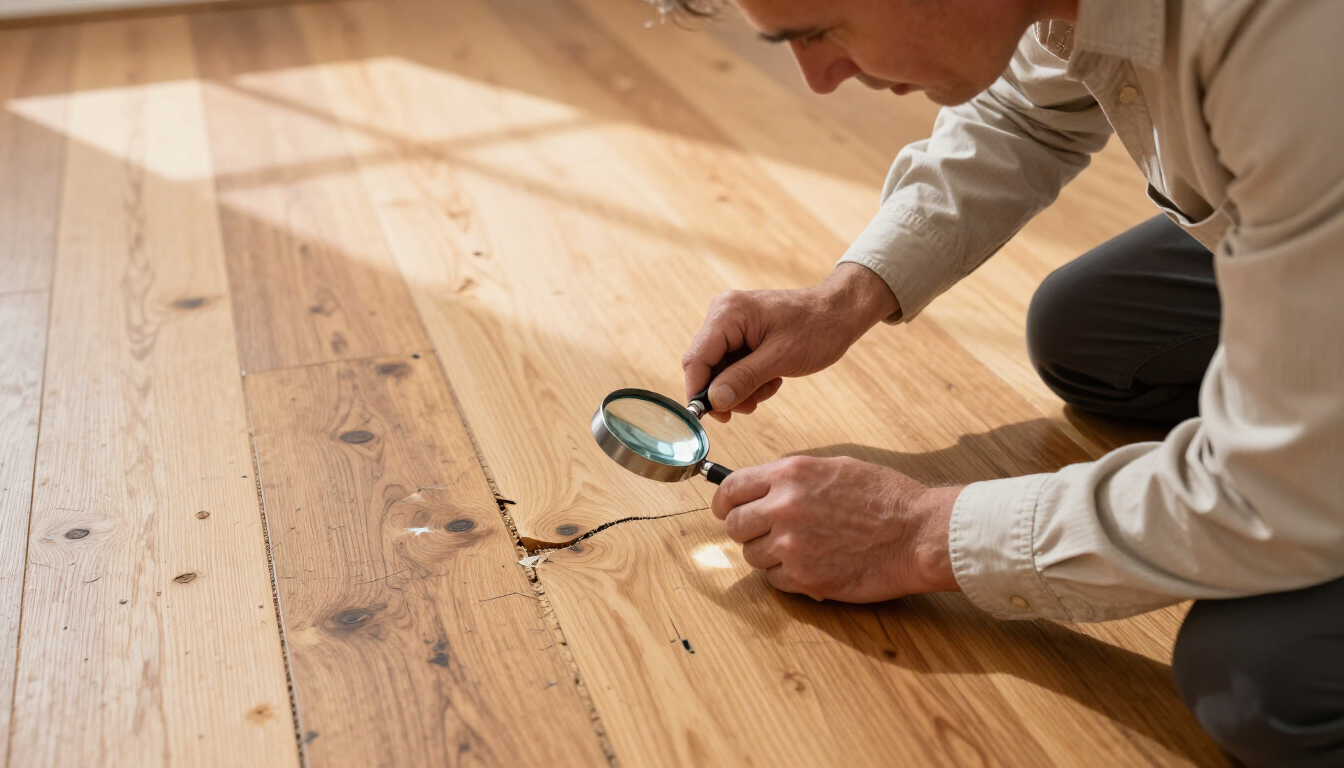
Floor cleaning tips sound simple — and the best ones really are. But the difference between a clean floor and a damaged one often comes down to a few overlooked habits: the wrong product, too much water, or skipping one step that compounds into a bigger problem over months.
Southern Maryland homes face specific challenges. High summer humidity swells wood grain. Sandy soil from the Chesapeake Bay shoreline acts like sandpaper on finishes. Red clay from Prince George's and Charles Counties tracks in deep grout staining. These five tips account for all of it.
Dry clean before you wet clean — every time
Applies to: hardwood, tile, and groutThis is the single most impactful habit you can build. Before any wet mopping, run a dry microfiber pad or a vacuum with a soft floor head across the surface first. The grit and debris you pick up dry is the same material that grinds into your floor's finish when pushed around by a wet mop.
On hardwood, fine particles from tracked-in soil act like sandpaper with every pass of a damp mop. On tile, grit left behind settles into grout lines where it bonds as a dark, permanent stain. Removing it dry first takes two minutes and prevents years of cumulative damage.
Use a flat microfiber dry mop or a vacuum on the bare floor setting (no beater bar on hardwood). Work room to room so you're not tracking debris you just swept back into clean areas.
Skipping straight to a wet mop, especially after outdoor activity. In Southern Maryland's summer months, a single trip through the yard can bring in enough fine debris to dull a finish with one pass.
Use a nearly dry mop on hardwood — not a damp one
Applies to: hardwood and engineered wood floorsThe phrase "damp mop" is one of the most misunderstood instructions in floor care. To most people it means "not soaking wet." In hardwood terms, it means the mop should feel barely moist when you press it against your palm — closer to dry than damp.
Wood is hygroscopic: it absorbs moisture from its environment constantly. In Southern Maryland's humid summers, your floors are already absorbing moisture from the air. Adding excess water from mopping compounds this, pushing liquid into the seams between planks where it causes cupping (edges that bow upward), gapping, and eventually subfloor damage. Any water that sits on the surface for more than 30 seconds is too much.
Spray hardwood cleaner directly onto your microfiber mop head, not onto the floor. Wring the mop until it no longer drips. The floor should look dry within seconds of each pass.
Steam mops entirely on hardwood — they're convenient but force heat and moisture directly through the finish and into the wood grain. The damage is invisible at first and cumulative over time.
Match your cleaner to your surface — pH matters more than you think
Applies to: all floor typesWalk into any Southern Maryland grocery store and the cleaning aisle is full of products claiming to be "safe for all floors" or "multi-surface." Most aren't — at least not for wood and natural stone. The issue is pH: acidic cleaners (vinegar, lemon-based products, many "natural" sprays) degrade polyurethane finishes on hardwood and etch the surface of marble and travertine over time.
The damage from using the wrong cleaner isn't dramatic — you won't see it happen. But after six months, the finish starts looking dull and slightly hazy. After two years, it begins to peel. By then you're looking at a full sand and refinish instead of a simple maintenance cleaning.
- Hardwood (polyurethane finish): pH-neutral wood-specific cleaner. Bona Hardwood Floor Cleaner is widely available and trustworthy.
- Hardwood (oil finish): Oil soap or oil-based cleaner specifically. Avoid water-based cleaners that strip the oil treatment.
- Ceramic & porcelain tile: pH-neutral all-purpose or tile cleaner. Avoid anything acidic — grout is cement-based and vulnerable.
- Natural stone (marble, travertine): Stone-specific pH-neutral cleaner only. No vinegar, no citrus, no general-purpose sprays.
- Grout lines: Alkaline cleaner for periodic deep cleaning. Avoid bleach for routine use — it discolors colored grout and weakens cement-based grout over time.
Diluted white vinegar is frequently recommended online as a "natural" floor cleaner. It works fine on some surfaces but has a pH of 2–3 — acidic enough to eat through polyurethane finish and etch natural stone. It should not go on hardwood or stone, ever.
Treat grout stains within 24 hours — don't let them set
Applies to: tile and groutGrout is porous cement. When a liquid or colored substance contacts it — red wine, tomato sauce, the red clay soil so common around Waldorf and La Plata — it begins absorbing within minutes. Within 24 hours, much of the stain has bonded to the porous structure and routine cleaning won't remove it.
The Southern Maryland clay soil problem is particularly stubborn. The iron-rich red clay that's prevalent in Charles County and parts of Prince George's County leaves a rust-toned stain in light-colored grout that deepens with every cleaning pass that pushes it further in rather than lifting it out.
Blot liquids immediately — don't wipe (wiping spreads the stain). Apply a small amount of alkaline spray cleaner directly to the grout line, let it dwell for 2–3 minutes, then scrub with a stiff-bristle grout brush. Rinse clean with water. For clay soil, a paste of baking soda and water as a poultice left for 10 minutes works well for fresh stains.
Build a simple routine — consistency beats intensity
Applies to: all floor typesThe homeowners whose floors hold up best over time don't have elaborate cleaning routines — they have consistent ones. A 5-minute daily dry sweep and a 15-minute weekly damp clean prevents the buildup that makes floors look tired and require intensive effort to restore.
Southern Maryland's seasonal rhythms make a simple schedule easier to stick to. Pollen season in April and May means more frequent dry sweeping. Crab season and outdoor entertaining in summer means being more attentive to entryway floors. Wet leaves and mud in fall means a doormat at every entrance and a quick check of high-traffic zones daily.
- Daily: 5-minute dry microfiber sweep in high-traffic areas (entryway, kitchen, main hallway). Spot-clean any spills immediately.
- Weekly: Full dry sweep of all floor areas, followed by a near-dry mop with the correct cleaner for your surface type.
- Monthly: Clean grout lines in bathrooms and kitchen with a grout brush and alkaline spray. Check for any finish dulling or discoloration on hardwood.
- Annually: Schedule a professional deep clean to remove buildup a routine can't reach, and reseal grout if needed. This is what keeps floors looking new indefinitely.
Place a coarse mat outside each door and a soft mat inside. Studies estimate that 80% of indoor floor soil walks in from outside. A 10-foot entry mat system removes most of it before it ever reaches your floors.
When routine isn't enough, we're here.
These five habits will keep your floors looking great day to day. But every floor eventually needs a professional deep clean — to remove the buildup that routine mopping misses, restore dulled finishes, eliminate deep-set grout staining, and apply protective sealer that keeps your next year of maintenance effortless.
Precise Deep Cleaning serves Southern Maryland and New Jersey homeowners with hardwood floor cleaning, tile and grout restoration, and grout sealing. Free quotes, no obligation.